Promisses, promisses, promisses.
What are they worth?
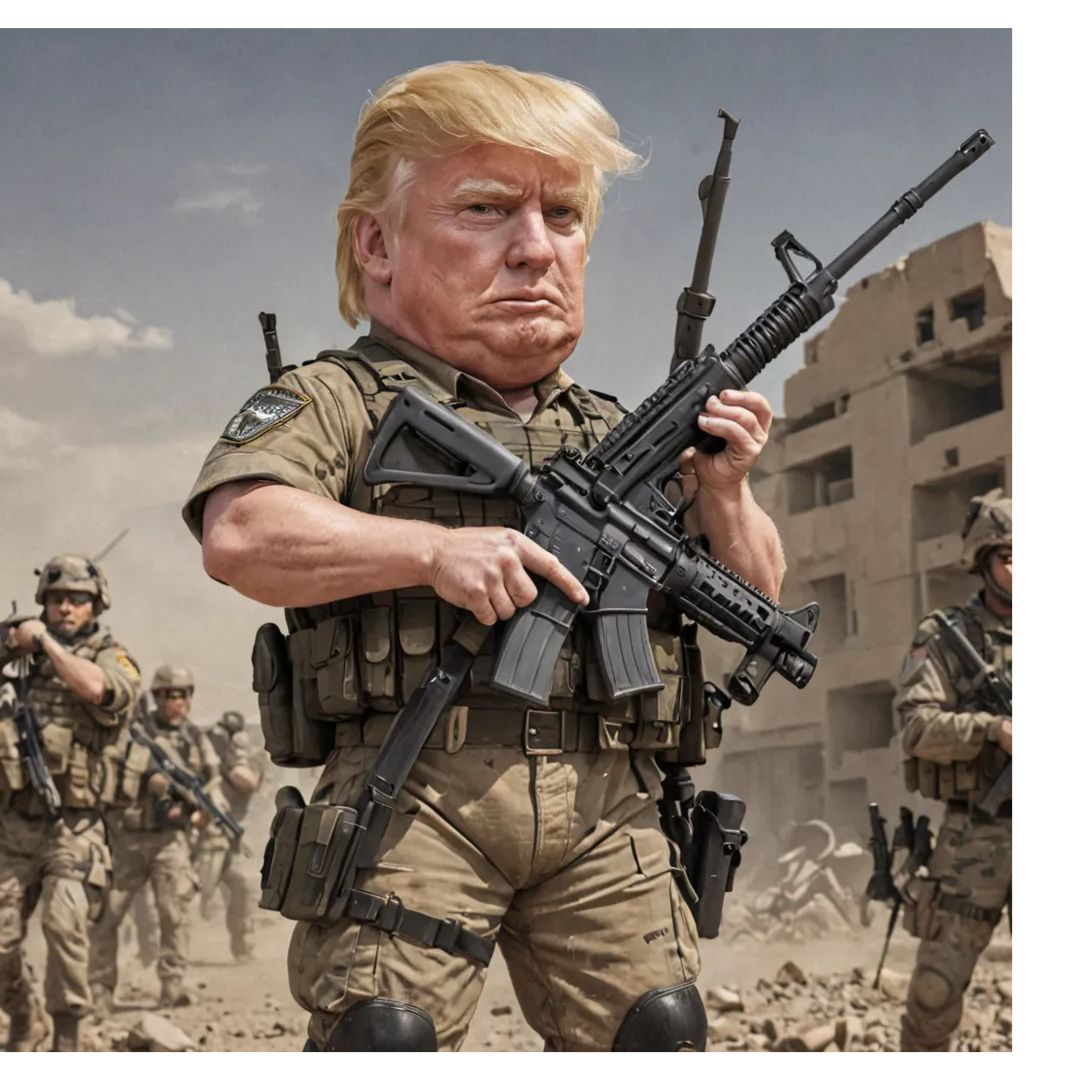
Donald J. Trump, 47th president of the USA:
"I'm not going to start a war, I'm going to stop wars."
"We will measure our success not only by the battles we win but also by the wars
that we end – and perhaps most importantly, the wars we never get into.".
🔥 Could we have seen it coming?
I think we could!
There are plenty of clues that point to a far from peaceful president:
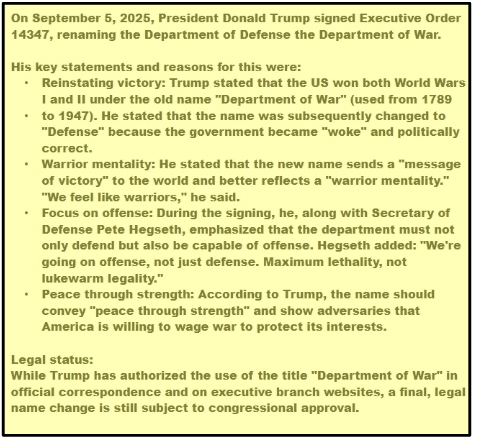
- First, of course, there's the renaming of the Ministry of Defense to the Ministry of War. A strange move for someone who wants to be seen as the president of peace (see the inserted box).
- It's also clearly visible domestically. Instead of unity, Trump is seeking revenge on his political opponents.
- Trump has a tremendous need to prove himself. And he craves admiration, even if it's for the wrong reasons. It's certainly not impossible that this need to prove himself stems from a deeply buried inferiority complex. He's never been able to break away from his father because he always needed help rebuilding his business empire, which he himself ruined.
- In his previous term, he was still held back by his administration, but now he's been able to choose his own administration, and for various positions, he's consistently hired people who often had little to no experience in the roles they were offered. I think the most important requirement was that they couldn't contradict Trump, so they wouldn't hinder his decisions.
- He treats everyone who disagrees with him as "the enemy" and is extremely vindictive. According to him, Iran has been America's enemy for years. George Bush designated Iran as one of the three countries that formed the "axis of evil."
- Trump was so averse to both Iran and Obama that in 2018 he unilaterally terminated a perfectly effective nuclear capabilities limitation treaty (JCPOA). Trump even called it the worst deal ever, without, however, having a plan to make it "a better deal," or even a deal at all.
- This has also been evident for some time in his handling of the immigration issue. He has practically set up his own militia to control (illegal) immigrants in the form of the new ICE, which is practically waging wars in American—primarily blue—states and cities.
- I want Greenland, if not by fair means then by foul.
- Ukraine is the aggressor (because I'm a friend of Putin). If you don't stop...
- We are going to take back the Panama Canal.
- The kidnapping with military force of Maduro in Venezuela. The competence of the US Army made him feel powerful ("mighty"). He was still drunk on the success of the American invasion of Venezuela, and that left him wanting more. Without realizing that a war with Iran is on a whole other level.
Meanwhile, he has frequently used threatening language, both against "his own" people and against various foreign powers. He is aggressive and contemptuous towards the press, forces reluctant party members to take his side, does not tolerate contradiction and is a pathological liar. In other words, he starts believing his own lies.
Unfortunately for himself (and for us), he's less intelligent than he gives us credit for, but he's nevertheless always presumptuous in decimating his opponents with his low-IQ pronouncements.
One of his greatest incompetences, in my opinion, is his inability to develop plans: he never gets beyond a "concept of a plan." This applies to domestic affairs, but also to his approach to foreign affairs. For example, after the Maduro kidnapping, he had no plan ready to take over the country's leadership. I suspect the same applies to the current situation with Iran. His Secretary of War isn't much use to him in that regard, because he parrots his master.
🔥 What actually happened (based on recent reporting)
- The US and Israel have carried out a massive attack on Iran, killing Ayatollah Ali Khamenei and a large part of the Islamic Council, including the council's representatives in the talks held to avert war. This is an unprecedented event in the history of the Islamic Republic.
- Iran has retaliated on a large scale, with missiles and drones on Israel and on Gulf states that house American bases, including Qatar, the UAE, Kuwait and Saudi Arabia.
- Qatar has downed two Iranian Su24 bombers and halted LNG production after drone attacks on energy installations.
- The region is on full alert, with fears of a wider war disrupting oil and gas markets.
Note:
The fact that the Islamic Council met in an above-ground space leads me to believe the US did not declare war. The council likely believed that as long as the parties were in talks, no action would take place.
Because the Mossad had intelligence that they would therefore not meet in a bunker, this was the moment to eliminate a large part of Iran's leadership in one fell swoop.
Note 2:
Eliminating the top brass of the party does not mean that Iran has become defenseless. The command of the army and the party has been entrusted deep within the organization.
Note 3:
The story goes that Trump actually wanted to launch the attack much earlier, even before preparations were complete and while the American military wasn't yet at full strength.
Donald Trump is furious with Iran because of repeated plots to assassinate him, confirmed by US intelligence agencies. These plots are seen as retaliation for Trump's 2020 assassination of Iranian General Qassem Soleimani. In 2024 and early 2025, multiple plots came to light, leading to a massive increase in security around Trump.
One could therefore also argue that Trump's personal motivation was the primary reason for starting this war.
🌍 What really drives this crisis
- Regional balance of power Iran's influence in Iraq, Syria, Lebanon and Yemen has been a thorn in the side of Israel and the Gulf states for years.
- Domestic politics Netanyahu is under enormous pressure. Trump has an interest in a "strong leader" narrative. Iran was in the midst of internal tensions and economic crisis.
- Energy and geopolitics The attack on LNG installations in Qatar and oil infrastructure in Saudi Arabia directly affects the global economy. Oil and gas prices have already risen by 8–50%.
- Narrative warfare Each party tries to claim the story: Israel: "existential threat + liberation of the Iranian people" US: "security + retaliation" Iran: 'defence against aggression + martyrdom of Khamenei' Gulf countries: "stability + protection of energy supply"
- Trump's motivation to punish Iran?
🧭 What does this mean for the coming weeks?
There are three realistic scenarios: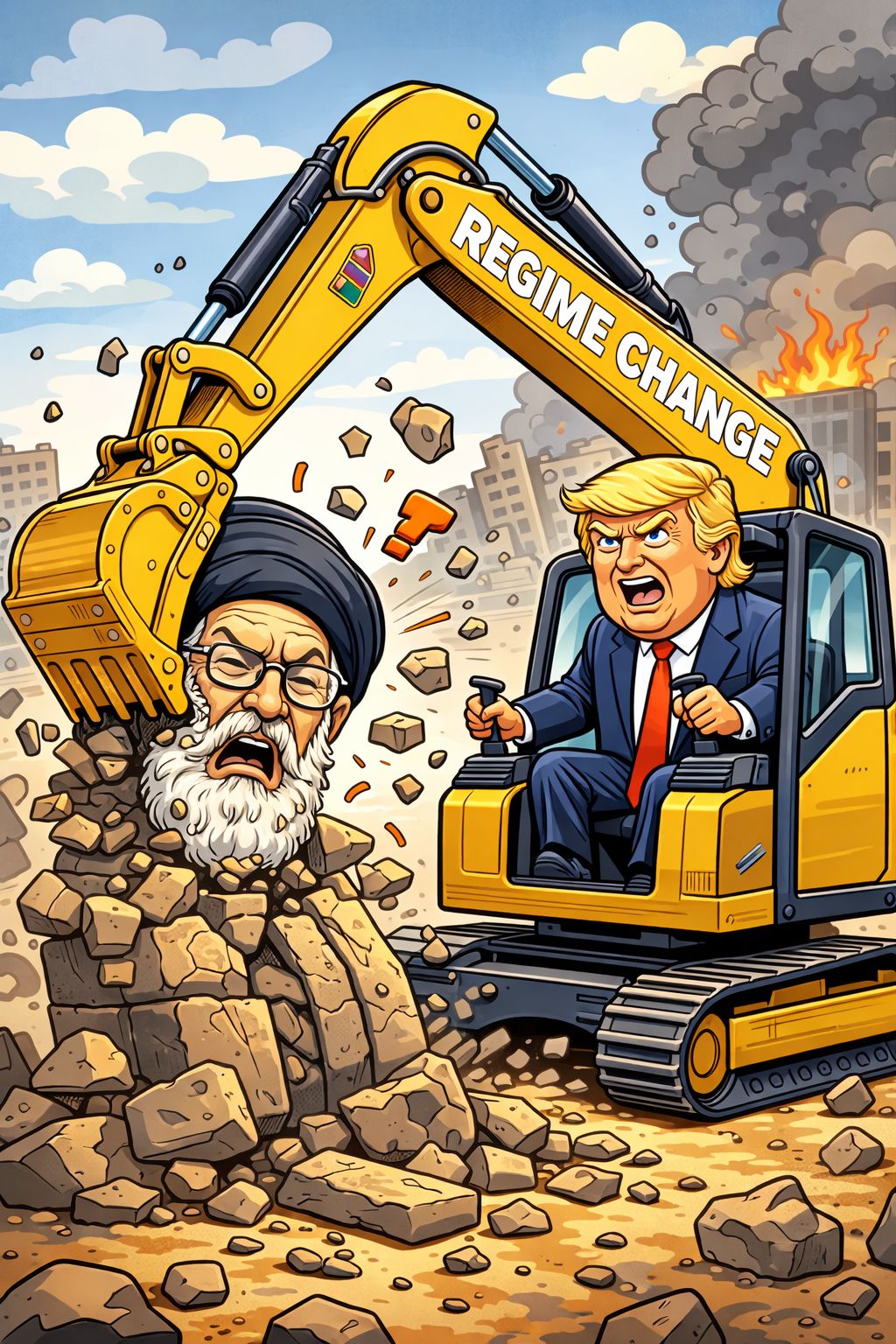
- Escalation to a regional war
- Iran continues to attack Israel and US bases.
- The US is carrying out "the big wave".
- Saudi Arabia and Qatar are further involved.
- Oil prices are exploding.
- A controlled escalation
- Intense violence, but with clear red lines.
- No invasion of Iran.
- Diplomacy via Oman, Qatar or Europe.
- An unexpected internal shift in Iran
- Khamenei's death creates a power vacuum.
- Factions inside Iran can clash. This can accelerate or slow down escalation.
🔥 Who is driving this crisis, and why?
Based on the facts of the past few days:
- Israel has a strategic importance and an ideological motive.
- The US has a political motive and a security motive.
- Qatar and the Gulf States are being dragged along against their will.
- Iran reacts out of survival and revenge.
The role of Is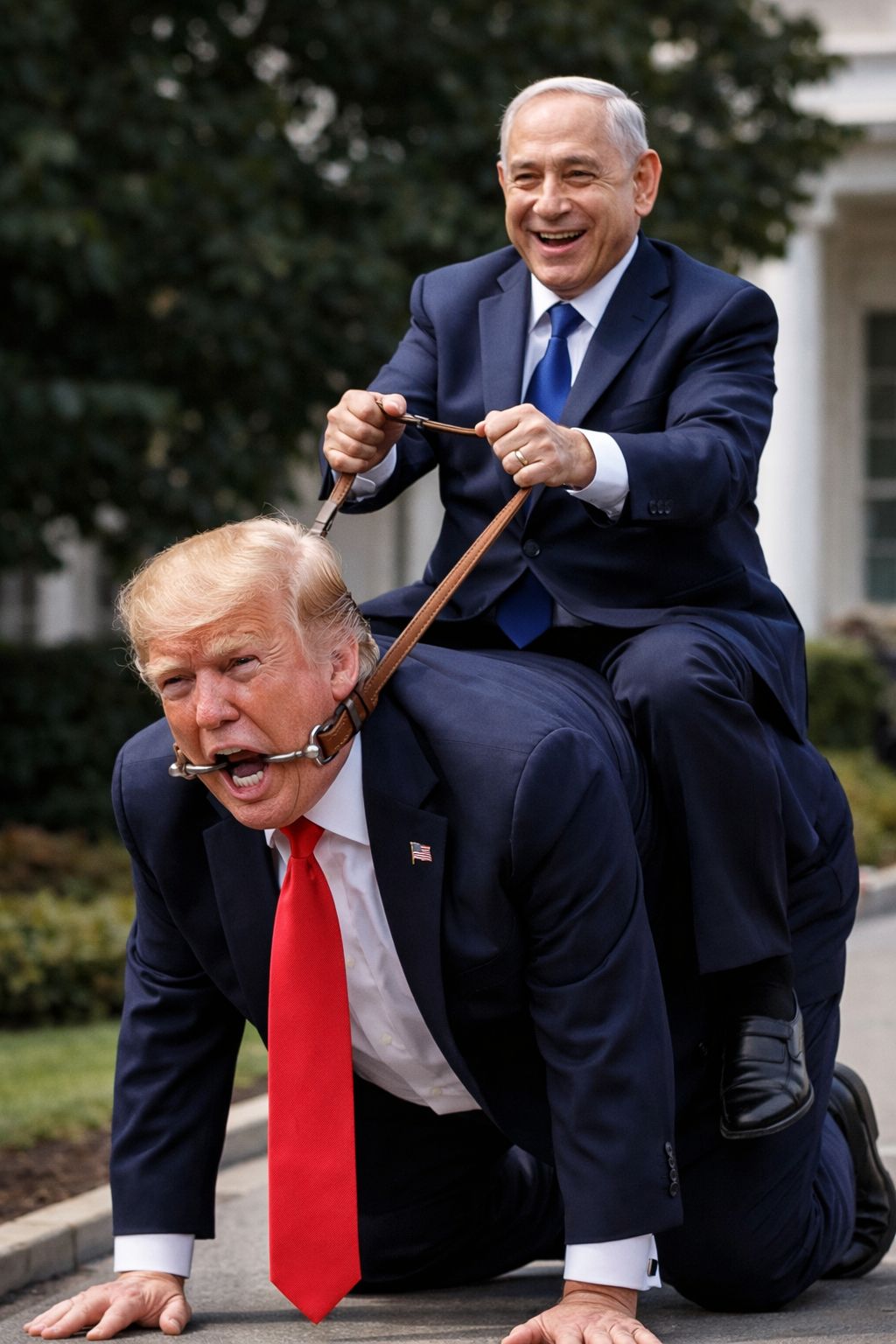 rael and Netanyahu
My suspicion that Netanyahu is a driving force is in line with his own words.
He has explicitly said that Israel is waging this campaign to
> take away "Existential threats"
> "help the Iranian people throw off the yoke of tyranny"
That's a regime-change narrative, but couched in terms of security and liberation. This aligns with previous Israeli strategies: slowing Iran's nuclear program, reducing regional influence, and fueling internal instability in Iran.
However, Israel lacks the capacity to combat Iran on its own for the long term.
Therefore, US involvement is crucial - and risky.
Incidentally, Trump has also mentioned regime change. However, it's almost impossible to achieve such a drastic change with bombing alone. That's why Trump hasn't tried it in Venezuela. I assume he doesn't dare promise "boots on the ground," because that would drag the US into a years-long guerrilla war.
Pete Hegseth didn't mince his words. Which just goes to show that there was, in fact, no comprehensive plan, despite months of preparation toogether with Israel. I also seriously doubt whether any objective goals were set to end the hostilities, although a few were mentioned:
> Destroying Iran's long-range missile capabilities. Missiles that, according to Trump, could soon reach America. Iran
does have that ambition, but according to a 2025 DIA (Defense Intelligence Agency) report, that might not happen
until 2035. By then, Iran could produce 60.
> Iran must never acquire nuclear weapons. The International Atomic Energy Agency (IAEA) declared in early March
2026 that this fear was unfounded, as there was no evidence that Iran plans to produce a nuclear weapon. T Therefore, there was no imminent threat. Iran also has no working nuclear bomb to launch.
However, the narratives change day by day, sometimes even hour by hour.
The core layers of the Iran crisis
We are actually left with four interlocking layers:
- Nuclear dossier – the official story.
- Regional power struggle – Iran vs Israel + Gulf states.
- Domestic politics – in Israel, the US, Iran.
- Narrative warfare – the "lies", frames and shifting motives.
I take them one by one, and then I will make a table out of them.
1. The nuclear dossier and the "thrown back years" claim
That "we have thrown Iran back years" line is almost a genre in itself. After sabotage, cyber attacks (Stuxnet), murders of scientists, explosions in nuclear installations, you invariably hear: "Iran has been set back years in its nuclear program."
Problems with that claim:
- Technical:
- Iran has spread knowledge, people and infrastructure.
- Centrifuges can be replaced; know-how does not disappear.
- Politics:
- The claim legitimizes the operation ("you see, it works").
- But if it was so effective, why do people keep warning that Iran "almost" has a bomb?
- This "thrown back years" rhetoric is often exaggerated and politically instrumental.
- It serves to sell military actions and to increase pressure for new steps (sanctions, attacks, regime change).
2. Israel, Netanyahu and the driving forces
Netanyahu has been one of the most consistent advocates of a hard line against Iran for decades. A few constant elements in his story:
- Iran = existential threat to Israel.
- Nuclear Iran = never accept.
- Regime change = implicit ideal image.
He has stood in the UN with a cartoon bomb, lobbied for years in Washington against the JCPOA (the nuclear agreement), and always emphasizes that:
- Diplomacy is "not enough".
- Only force (sanctions, threats, possible attacks) can stop Iran.
Why is Netanyahu such a driving force?
- Strategic:
- Iran arms Hezbollah, Hamas, and other groups around Israel.
- A stronger Iran = more pressure on Israel on multiple fronts.
- Ideologically:
- He sees himself as the protector of the Jewish state against "existential enemies".
- Domestic politics:
- An external enemy often helps to overshadow internal divisions.
- An "Iran threat" is a recurring mobilizing factor.
Netanyahu is a driving force behind escalation towards Iran - not as the only actor, but as a constant pushing force.
3. The US, Trump and regime change
Two things that come together nicely:
- Regime change as an original, semi-public wish.
- The disappearance of that term from official rhetoric.
Historical pattern:
- Bush era: "Axis of Evil", regime change discourse very explicit.
- Obama time: JCPOA, focus on containment through agreement.
- Trump era: getting out of JCPOA, "maximum pressure", rhetoric that sometimes leans towards regime change, but is rarely called that.
Why does "regime change" disappear from the mouth?
- Because it immediately implies "boots on the ground".
- And that means: dead American soldiers, long war, Iraq trauma.
- Because then you have responsibility for what comes next.
- Look at Iraq and Libya: chaos after the fall of the regime.
So you get a more subtle frame:
- "We want to change the behavior of the regime."
- "We support the Iranian people."
- "We want Iran never to get a nuclear weapon."
But the underlying desire of some hawks (in the US and Israel) remains:
- A weaker, internally divided or fallen regime in Tehran.
4. Qatar: Friend, Foe, Intermediary
Qatar is a fascinating "and-and" player:
- Houses a large American base.
- Shares a gas field with Iran (North Dome/South Pars).
- Often plays mediator (Taliban, Hamas, hostage deals).
- Has had tensions with Saudi Arabia and the UAE, partly because of his relatively open attitude towards Iran and Islamist movements.
So:
- Qatar is not a simple "great enemy" of Iran, rather an ambivalent competitor/partner.
- But: In a regional conflict, Qatar can quickly be pushed into a camp (US camp), or become a target because there is American infrastructure.
Qatar also plays a role in forming narratives towards Washington (through lobbying, deals, arms purchases, prestige projects) is very plausible. But that is more influence politics than frontal enmity.
The lies, frames and shifting motives
Let's start with the "table of lies" around Iran, concrete, clear, important.
Table 1 – Some core lies/misleading narratives surrounding Iran
|
# |
Narrative / Claim |
Problem / lying element |
Functional for whom? |
|
1 |
“We have set Iran back years in their nuclear program.” |
Technically highly exaggerated; know-how remains, capacity is rebuilt. |
Israëlische hIsraeli hawks, US hawks, domestic legitimacy.aviken, VS-haviken, binnenlandse legitimatie. |
|
2 |
“We are only concerned with non-proliferation, not with regime change.” |
Regime change is often an implicit goal or desire; policy points to this. |
US and Israeli policymakers want to avoid Iraq scenario in rhetoric. |
|
3 |
“Iran is about to have a bomb tomorrow.” |
Threat often exaggerated; timelines have been shifting for decades. |
To sell pressure, sanctions and military options. |
|
4 |
“Sanctions target the regime, not the people.” |
In practice, the population suffers greatly;the regime often finds ways to survive. |
Governments that want to avoid moral responsibility. |
|
5 |
“We support the Iranian people.” |
Often selective and instrumental; support stops where geopolitics collides. |
US, EU, Iran’s regional rivals. |
|
6 |
“Diplomacy has been tried and has failed.” |
The JCPOA demonstrably worked on the nuclear front until it was terminated. |
Opponents of agreements, proponents of hard lines. |
|
7 |
“Iran is the source of instability in the region.” |
Iran is a major factor, but not the only one: Iraq invasion, Saudi role, Israeli occupation, etc. |
Iedereen die een enkelvoudige vijand nodig heeft. |
Table 2 – Actor matrix: who wants what, and why?
|
Actor |
Core interests vis-à-vis Iran |
Official narrative |
Actual leverage |
|
Israël (Netanyahu) |
Weaken Iran, stop its nuclear program, limit Iran's regional influence |
“Existential threat, self-defense” |
Intelligence, sabotage, US lobbying, limited military capabilities. |
|
VS (Trump/others) |
Non-proliferation, regional dominance, domestic political gain |
“Security, support for allies, support for the people” |
Sanctions, military power, diplomacy, financial pressure. |
|
Iran |
Regime survival, regional influence, deterrence |
“Resistance to imperialism, defense, sovereignty” |
Proxies (Hezbollah, militias), rockets, energy, demography. |
|
Qatar |
Regime survival, Iran-US balance, economic growth |
“Mediator, stable partner” |
Gas, media (Al Jazeera), diplomatic networks, US base. |
|
Saudi-Arabië / VAE |
Containing Iran, own regional hegemony, economic stability |
“Stability, anti-terrorism” |
Oil, arms purchases, religious influence, lobbying in the West. |
|
EU |
Non-proliferation, stability, energy, refugee management |
“Diplomacy, JCPOA, Multilateralism” |
Diplomacy, limited economic leverage, normative power. |
When you boil everything down to its essence, you see:
- Official narrative:
- “We want to prevent Iran from acquiring a nuclear weapon.”
- Underlying reality:
- It's also about:
- regional power,
- regime survival (on all sides),
- domestic political gain,
- control over energy and trade routes,
- ideological enemy images.
And my observation is precisely the painful core:
- The lies lie not only in blatant untruths, but especially in omissions, exaggerations, and shifting motives.
- “Regime change” is no longer spoken aloud, but the specter still haunts the corridors of Washington, Jerusalem, and some Gulf capitals.
- The claim that Iran has been “set back years” is a narrative weapon, not a neutral technical assessment.
🌍Conclusion(?)
A real conclusion is not yet in order, but perhaps superfluously, to conclude this essay, a systematic, layered inventory of the most important lies, distortions, and narratives surrounding Iran, based on what we have just gathered about digital warfare, misinformation, and strategic framing in the region.
The sources we just gathered reveal three main themes:
- Digital misinformation and deepfakes distort the picture of the Iran-Israel dynamic.
- Domestic Iranian protests are framed radically differently by both sides: the regime says "foreign conspiracy," the opposition says "civil uprising."
- Iran and its allies use narratives to maintain influence in Iraq, spreading contradictory messages to mislead observers.
These three themes provide us with a solid foundation to answer your question: what are the big lies, distortions, and narratives that have polluted the Iran dossier for decades? 🧩 1. The nuclear lies and distortions surrounding Iran (macro level)
🔥 A. Nuclear program
This is the most abused theme.
- “Iran is weeks away from a bomb.”
This claim has been repeated since 2005. Timelines keep shifting. Its purpose: to increase pressure, undermine diplomacy, and legitimize military options. - “We’ve set Iran back years.”
This is a standard refrain after sabotage, assassinations, or cyberattacks. The problem: the knowledge, design, and personnel remain; recovery is quick. - “Iran wants a bomb by definition.”
Iran primarily wants deterrence and regime survival. That’s not the same as an operational weapon.
🛰️ B. Regional Power and Security
Here, threats are often exaggerated or selectively presented.
- “Iran is the source of instability in the Middle East.”
As if the Iraq invasion, Saudi interventions, Israeli occupation, and Turkish operations don't play a role. - “Iran fully controls all its proxies.”
Hezbollah, Iraqi militias, and Houthis have their own agendas. Iran directs, but doesn't control everything. - “Iran wants to destroy Israel.”
The rhetoric is extreme, but strategic behavior points to deterrence, not a plan for all-out war.
🗳️ C. Domestic Politics in Iran
Here, two counter-narratives collide head-on.
- Regime narrative:
- “All protests are foreign plots.” The Conversation
- “The people support the Islamic Republic.”
- “The opposition is small, marginal, and Western-driven.”
- Opposition narrative:
- “The whole country is on the verge of collapse.”
- "The regime is collapsing."
- "Every wave of protests is the beginning of a revolution."
Both are too simplistic. Iran is a large, complex country with deep internal fault lines and a regime that still has considerable repressive capacity.
🧠 D. Digital misinformation and deepfakes
The recent wave of deepfakes and AI-generated war footage is a new category of lies.
Examples from the sources:
- AI videos supposedly showing Israeli damage.
- Deepfakes simulating Iranian missile attacks.
- Video game footage presented as real. France 24
Function:
- sow panic, prevents you from clear thinking
- demonize the enemy
- mobilize domestic support
- influence international perception
🧩 E. The narratives per actor (who tells which story?)
- 🇮🇷 Iran (regime)
- “Protests are foreign conspiracies.” The Conversation
- “We defend the region against imperialism.”
- “Our proxies protect Iraq’s sovereignty.” Foreign Policy Research Institute
- “Israel and the US want to destroy us.”
- 🇮🇷 Iranian opposition
- “The regime is on the verge of collapse.”
- “Every wave of protests is a revolution.”
- “The West must intervene.”
- 🇮🇱 Israel
- “Iran is an existential threat.”
- “Diplomacy doesn’t work.”
- “Iran is about to have a bomb.”
- “Regime change is not the goal” (though often implicitly it is).
- 🇺🇸 United States
- “We only want non-proliferation.”
- “Sanctions target the regime, not the people.”
- “We support the Iranian people.”
- “We don't want war” (while military options remain open).
- 🇸🇦 Gulf States (Saudi Arabia, UAE)
- “Iran undermines regional stability.”
- “We are the defenders of order and the economy.”
- “Iran is responsible for sectarian conflicts.”
- 🇶🇦 Qatar
- “We are neutral mediators.”
- “We are not a party to the regional struggle.” In reality, they are balancing between Iran, the US, and the Gulf.
🧩 E. The 20 Most Important Lies and Distortions (Compact Overview)
|
# |
Lie / Narrative |
Why Misleading | Who Benefits |
|
1 |
Iran is on weeks of a bomb |
Repeated for 20 years |
Israel, US hawks |
|
2 |
Iran Has Been Set Back Years |
Technically Incorrect |
Israël, US |
|
3 |
Protests Are Foreign Conspiracies |
Denies Real Grievances |
Iranian Regime |
|
4 |
Regime Is On The Collapse |
Too Simplistic |
Opposition |
|
5 |
Iran is the source of instability |
Selective |
Gulf States, Israel |
|
6 |
Diplomacy does not work |
CPOA did work |
Anti-Iran hawks |
|
7 |
Sanctions only affect the regime |
People suffer the most |
US, EU |
|
8 |
Iran fully controls proxies |
Proxies have autonomy |
Iran and opponents |
|
9 |
Iran wants to destroy Israel |
Rhetoric ≠ strategy |
Israeli hawks |
|
10 |
US does not want regime change |
Historically inconsistent |
US |
|
11 |
Iran wants war |
Iran wants deterrence Israel |
Israel, US |
|
12 |
Israel only wants security |
Also regional hegemony |
Israel |
|
13 |
Gulf states are neutral |
hey conduct their own power politics |
Saudi/VAE |
|
14 |
Qatar is neutral |
Balancing ≠ neutral |
Qatar |
|
15 |
Deepfake Videos Are Real |
Digital Warfare |
All Sides |
|
16 |
Iran is economically isolated |
Trade via China/India |
Iran |
|
17 |
Iran is militarily weak |
Asymmetric strength underestimates |
Iran |
|
18 |
Iran is militarily unbeatable |
Overestimating |
Iran |
|
19 |
The people support the regime |
Repression masks discontent, but sure more than 10% does |
Regime |
|
20 |
The people want Western intervention |
No broad support |
Opposition, hawks |
Now I am left with only a few random comments
Trump told us he was afraid Iran would attack first.
That's why the attack started before the talks about an agreement had ended. This is probably an excuse Trump made up to declare war, but at the very least, to try to fall under the laws of international law.
Did he succeed? Nah...
Several US embassies in the Middle East do not (yet) have an ambassador.
Vacant positions (headed by a Chargé d'Affaires):
These countries do have an embassy, but the ambassadorial position is currently vacant. Day-to-day management is in the hands of an acting chargé d'affaires (Chargé d'Affaires a.i.):
- Egypt: The position has been vacant since January 2026. It is headed by Evyenia Sidereas.
- Saudi Arabia: Currently vacant; the embassy is headed by Alison Dilworth.
- United Arab Emirates (UAE): The position has been vacant since August 2025 and is headed by Eric Gaudiosi.
- Syria: Although a formal position exists, the embassy in Damascus has been closed since 2012 due to the civil war.
Could this perhaps be related to Trump's "Special Envoy," Steve Witkoff? This might give him more freedom to act on behalf of America, but even more so to the benefit of Trump and himself?
Is this also the reason why Americans in the war zone were only warned to leave after three days?
By the way: Did you know the budget for the Ministry of Foreign Affairs was cut in half?
Iran's gedode geestelijk leider was ook de geestelijk leide van sjiiten in andere landen.
Iran's spiritual leader, Ayatollah Ali Khamenei, has also been the spiritual leader of a large portion of the world's Shiites since 1989 (rough estimate: 150-260 million).
- 60-70 million in Iran (90%) of which 10 million are followers of the Ayatollah.
- 30 million in Pakistan.
- 20 million in India.
- 20 million in Iraq.
- Of the Shiites in Iran,
FBI
In early March, FBI Director Kash Patel fired an elite counterintelligence unit specializing in Iran in retaliation for their role in the classified documents investigation of Donald Trump. He targeted an elite counterintelligence unit that investigates threats from foreign adversaries and specializes in Iran, according to more than half a dozen sources with knowledge of the firings.